

How Daily Meditation Can Create a Calmer and More Focused Everyday Life
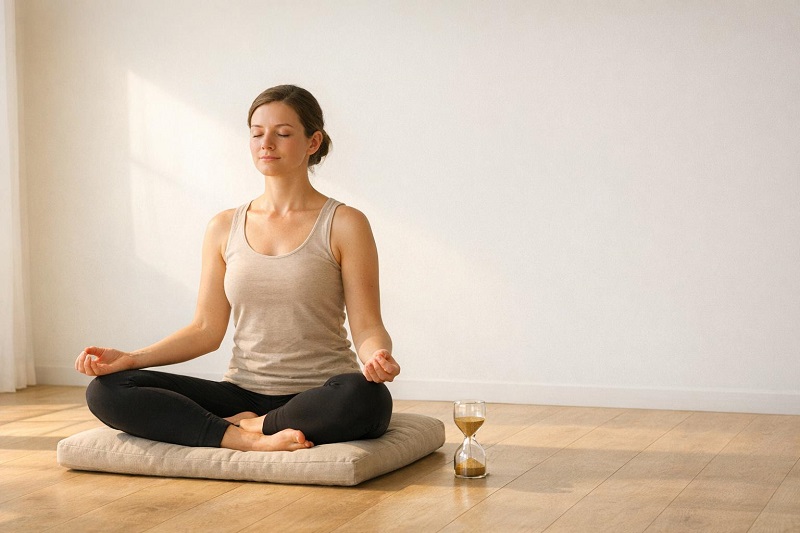
Most people approach meditation with an impossible standard. They sit cross-legged on a carpet, close their eyes, and attempt to force their minds into a state of absolute, pristine silence. Within forty-five seconds, an avalanche of mundane thoughts rushes in: an unresolved email from yesterday, a vague worry about car maintenance, the sensation of an itchy left ankle, and the realization that dinner plans are still up in the air. Frustrated by the inability to empty their thoughts, they open their eyes, declare that they are simply bad at meditating, and return to the digital chaos of daily life.
This common frustration stems from a fundamental misunderstanding of what contemplative practice actually is. Meditation is not an exotic mental trick designed to turn your brain into an empty vacuum. It is an intentional, physical workout for your attentional faculties.
In a modern environment specifically engineered to fragment human concentration—where push notifications, open browser tabs, and social algorithms constantly bid for our cognitive bandwidth—our minds live in a perpetual state of low-grade panic. Daily meditation acts as a quiet countermeasure. By training your mind to recognize distraction and disengage from subconscious loops, you build an internal sanctuary of focus and emotional stability that follows you off the cushion and into the busiest hours of your day.
Taming the Default Mode Network
To understand why daily practice feels so restorative, you first have to understand what your brain does when you are not actively focusing on a task.
Whenever you are waiting in line at the grocery store, sitting in traffic, or folding laundry, your brain defaults to a specialized neural circuit known as the default mode network. This network is responsible for self-referential thought—the relentless internal monologue that replays past conversations with regret, fabricates worst-case future scenarios, and constantly evaluates where you stand in relation to other people.
Left unchecked, this internal narrator produces an enormous amount of unnecessary friction. You find yourself feeling anxious or depleted without any obvious external threat, simply because your default state is busy catastrophizing.
Meditation directly alters this baseline activity. When you commit your attention to a physical anchor—such as the sensation of air passing through your nostrils or the rising of your chest—the default mode network quiets down.
With consistent daily repetition, the neural connections within this wandering network begin to weaken, while the networks responsible for present-moment awareness and executive control grow thicker and more efficient. Over time, you spend far less mental energy lost in unhelpful rumination, clearing away the psychological fog that drains your vitality before the workday even hits its midpoint.
Reclaiming Focus: Training the Return, Not the Stillness
The biggest revelation for any new practitioner is that getting distracted is not a failure; it is the entire point of the exercise.
Think of attention as a physical muscle that has spent years sitting on a comfortable couch. If you go to the gym to build your arms, you do not hold a dumbbell motionless at chest height. You lift the weight, lower it, and lift it again.
In meditation, the moment you notice that your mind has wandered is a single repetition.
When you sit down to focus on your breathing, your mind will inevitably drift toward a work deadline within twenty seconds. The magic happens at the twenty-first second, when a flicker of awareness interrupts the fantasy: you realize you are no longer paying attention to your breath. In that specific moment, instead of berating yourself for losing track, you calmly disengage from the daydream and steer your attention back to physical sensation.
That act of gentle redirection is what builds cognitive stamina. When you practice this fifty times in a single ten-minute session, you are building the exact neurological circuitry required to ignore a pinging smartphone, resist the urge to open a social media app during a difficult spreadsheet project, and maintain deep, sustained engagement during complex work tasks.
Creating the Critical Pause Between Stimulus and Response
Most of our daily stress is not caused by the events we encounter, but by our automated, involuntary reactions to them.
A sharp comment from a coworker, a sudden flight delay, or a child spilling a glass of milk across a clean table immediately triggers the brain’s alarm center. Heart rates spike, muscles tighten, and words are spoken in frustration before rational judgment has a chance to intervene. We spend enormous amounts of energy cleaning up the emotional wreckage of our own knee-jerk reactions.
Daily meditation introduces what psychologists call the critical pause.
By training yourself every morning to observe thoughts and physical impulses without immediately acting on them, you create a buffer between external stimuli and internal choices. When an inflammatory email arrives in your inbox, the physical sensation of anger still arises—your stomach may clench, your jaw might tighten—but because you have practiced non-reactive observation, you do not instantly hit reply with a defensive diatribe.
You see the physiological surge for what it is: temporary bodily feedback. You take a breath, allow the acute chemical spike to settle, and formulate a measured, constructive response. That small gap of two or three seconds transforms your relationships, stabilizes professional interactions, and preserves an extraordinary amount of daily peace.
Dismantling the Perfectionist Approach to Practice
The most common reason people abandon meditation is an unsustainable setup. They assume that to receive any meaningful benefit, they must dedicate forty-five minutes every morning inside a silent, dimly lit room outfitted with meditation cushions and incense. When their busy schedule makes that routine impossible, they abandon the habit entirely.
Consistency will always outperform duration. An honest, imperfect eight to ten minutes of daily sitting will rewire your neural pathways far more effectively than an ambitious hour-long session completed once a month.
Build a low-friction routine that fits inside the margins of your existing life:
-
Anchor to an established habit: Sit for ten minutes immediately after your morning coffee, or right after you wash your face. Linking the new practice to an automatic behavior eliminates the friction of deciding when to practice.
-
Drop the posture dogma: You do not need to contort your legs into a lotus position. Sit upright in a supportive desk chair with your feet flat on the floor, your hands resting comfortably on your thighs, and your spine tall but relaxed.
-
Choose a single, neutral anchor: Keep your focus simple. Tune into the temperature of the air at the entrance of your nostrils, or the weight of your body pressing into the seat. Whenever your mind drifts into thinking, label the thought as simply thinking, and guide your awareness back to that physical sensation.
How Everyday Life Shifts Beyond the Cushion
The true measure of a successful contemplative practice is never how peaceful you feel while your eyes are closed in a quiet room. It is how you navigate the grocery store parking lot at 5:30 PM on a Friday.
As daily meditation takes root, subtle transformations begin to appear in your ordinary routines:
-
Conversational Presence: You find yourself actually listening to your partner, your colleagues, and your friends, rather than merely waiting for your turn to speak while silently preparing your rebuttal.
-
Sensory Reconnection: You begin to taste your food, feel the warmth of the sun on your arms, and notice the architecture of your city, pulling your experience out of abstract thought and back into rich sensory reality.
-
Effortless Sleep Onset: Because you have spent weeks practicing the skill of disengaging from runaway thoughts, lying in bed at night no longer invites a chaotic torrent of worries. When anxious ideas emerge in the dark, you recognize them, allow them to pass, and drift into restorative rest without a fight.
Meditation is not an escape from reality; it is an arrival into it. It will not eliminate the demands of your job, the unpredictability of family life, or the inevitable disruptions of the modern world. What it does provide is something far more valuable: a steady, grounded internal foundation that remains calm, clear, and focused no matter how loudly the world around you demands your attention.