
The Role of Breathing Techniques in Creating a More Mindful Yoga Practice
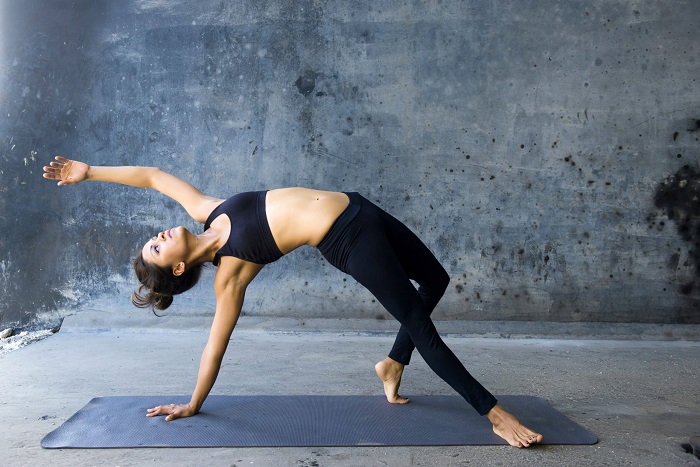
Walk into almost any contemporary yoga studio, and it is easy to see how the practice is so frequently mistaken for an athletic exhibition. Students sweat through intricate arm balances, contort into deep backbends, and push their hamstrings to match the person on the adjacent mat. In the pursuit of photogenic physical shapes, the most transformative element of the practice is often reduced to a background murmur: the breath.
When physical postures are stripped of conscious respiration, yoga ceases to be a contemplative discipline and becomes little more than calisthenics performed on a rubber mat. The ancient physical postures were never engineered as the ultimate destination; they were designed as deliberate physical frameworks to stabilize the body so the mind could settle.
The breath is the living bridge between mechanical movement and psychological stillness. By learning how to cultivate, regulate, and synchronize specific breathing patterns with physical postures, you transform a routine workout into a deeply grounding, mindful practice that recalibrates your entire nervous system.
The Autonomic Bridge: Rewiring the Nervous System from the Mat
Breathing occupies a singular position in human physiology. It is the only vital biological function that operates continuously on autopilot through the autonomic nervous system, yet remains completely accessible to conscious, voluntary control. You cannot directly command your spleen to filter blood or your stomach to speed up digestion, but you can instantly alter the depth, pace, and pause of your respiration.
Because of this unique connection, your breath serves as a direct manual dial for your autonomic nervous system.
When you encounter an intense, challenging posture—such as holding an extended Warrior II or balancing on your hands in Crow Pose—your brain’s threat-detection centers naturally misinterpret the burning muscular sensation and physical instability as genuine environmental danger. The sympathetic nervous system fires, releasing a cascade of stress hormones. Unconsciously, most practitioners react by holding their breath entirely or shifting into shallow, rapid chest breathing.
This unconscious breath-holding locks your body into a reactive fight-or-flight state. Muscle tissues constrict defensively, heart rates accelerate, and the mind fills with internal panic.
Conscious, deliberate diaphragmatic breathing breaks this neurological loop. When you consciously slow your exhalations and draw air deep into the lower lobes of your lungs, you stimulate the vagus nerve. This sends an undeniable physiological signal to your brain that you are safe despite the physical load. The parasympathetic nervous system engages, heart rate normalizes, and you discover how to cultivate profound psychological equanimity while your physical muscles are working under load.
The Breath as an Unforgiving Biofeedback Gauge
One of the greatest hazards in any movement practice is the intrusion of the ego. It is remarkably easy to push past biological boundaries, force tight joints into compromised angles, and court soft-tissue injuries simply to achieve the visual aesthetic of a pose.
Your breath operates as an infallible, real-time biofeedback monitor that keeps ego in check.
If your breathing becomes ragged, shallow, audibly strained, or suspended during an asana, you have crossed an invisible threshold. You are no longer practicing mindful yoga; you are engaging in aggressive physical coercion.
Treating the quality of your breath as the primary metric of success fundamentally alters your alignment decisions:
-
If you cannot maintain a smooth, four-second inhalation and four-second exhalation while reaching for your toes in a seated forward fold, your nervous system is telling you that you have pushed too far.
-
Backing out of the physical depth of a posture by ten percent to restore a calm, unrestricted breath cycle protects delicate joint capsules, prevents hamstring avulsions, and fosters genuine somatic awareness.
-
The pose serves the breath; the breath never serves the pose. When you commit to this hierarchy, your practice shifts from an outward performance to an internal inquiry.
Essential Breathing Techniques to Integrate on the Mat
Integrating traditional breathwork into physical movement requires starting with clear, reliable techniques that provide tangible physiological and cognitive anchors.
Ujjayi Pranayama: The Acoustic Anchor
Often referred to as the victorious breath or ocean breath, Ujjayi is the foundational breathing technique utilized in dynamic flowing practices like Vinyasa and Ashtanga. It is performed by inhaling and exhaling exclusively through the nose while maintaining a gentle, subtle contraction of the glottis at the back of the throat.
This gentle throat restriction creates a soft, rhythmic whispering sound reminiscent of distant ocean waves. That subtle sound serves two vital functions:
-
Thermodynamic Regulation: Passing air through a restricted airway creates internal mechanical friction, gently warming the incoming air and heating core tissues from the inside out to prepare muscles for safe stretching.
-
Attentional Grounding: The steady, rhythmic murmur acts as an acoustic anchor for a wandering mind. The moment your attention drifts toward tomorrow’s meetings or domestic chores, the audible whisper of your breath immediately draws your awareness back to physical sensation in the present moment.
Dirga Pranayama: The Three-Part Breath
Ideal for the opening and closing phases of a practice, Dirga Pranayama systematically trains the respiratory musculature to utilize the full volumetric capacity of the lungs. Practitioners often spend years breathing exclusively into their upper rib cages, abandoning roughly two-thirds of their lung capacity.
To execute the three-part breath, visualize your torso as an empty vessel filling with water:
-
The Lower Abdomen: Inhale smoothly, allowing the diaphragm to descend and gently pushing the belly outward like a soft balloon.
-
The Rib Cage: Continue the same inhalation into the middle chest, feeling the rib cage expand three-dimensionally outward to the sides.
-
The Clavicles: Draw the final sip of air into the upper chest, feeling the collarbones rise slightly.
Exhaling in reverse—softening the upper chest, drawing the ribs inward, and gently pulling the navel back toward the spine—ensures complete air exchange, clears stale carbon dioxide from the bottom of the lungs, and instills a deep sense of physical grounding.
The Kinesiology of Breath-Movement Synchrony
The traditional practice of Vinyasa is built on the deliberate synchronization of breath and dynamic movement. This pairing is not arbitrary poetry; it is rooted in functional human anatomy and respiratory biomechanics.
Every inhalation naturally engages muscles that expand the thoracic cavity and extend the vertebral column. Therefore, every movement that opens the front of the body, reaches toward the ceiling, lifts the chest, or arches the spine into a backbend is paired with an expansive inhalation. The breath creates internal volume, stabilizing the spine and preventing the vertebrae from compressing against each other during spinal extension.
Conversely, exhalation activates the transverse abdominis, lowers the rib cage, and empties internal abdominal volume. Consequently, movements that fold the torso forward, flex the spine, or twist the abdominal organs are executed on a long exhalation. Emptying the lungs removes physical mass from the abdominal cavity, creating functional anatomical space for the pelvis to rotate over the femur heads or for the spine to rotate safely along its axis.
When movement and breath merge into a seamless continuum, the mental friction of practicing disappears. You enter a state of psychological flow where the boundary between mover and movement dissolves.
Translating Mat Awareness into Everyday Equanimity
The true value of cultivating mindful breathing during yoga is never measured by how elegantly you move across a studio floor. The ultimate test of the practice occurs hours later, long after your mat has been rolled up and put away.
When you spend an hour practicing the discipline of remaining calm, breathing steadily through uncomfortable physical sensations and challenging balance postures, you are actively conditioning a neurological pathway. You are training your brain to recognize physical tension without defaulting to emotional reactivity.
When an inflammatory email lands in your inbox, when gridlock halts your evening commute, or when a tense personal conversation begins to escalate, that conditioned biological response rises to meet the moment. Instead of balling your fists, holding your breath, and reacting out of immediate frustration, you instinctively access the same breath pattern you practiced on the mat. You take a slow, diaphragmatic inhalation, lengthen your exhale, and respond from a place of clarity, control, and lasting internal calm.